

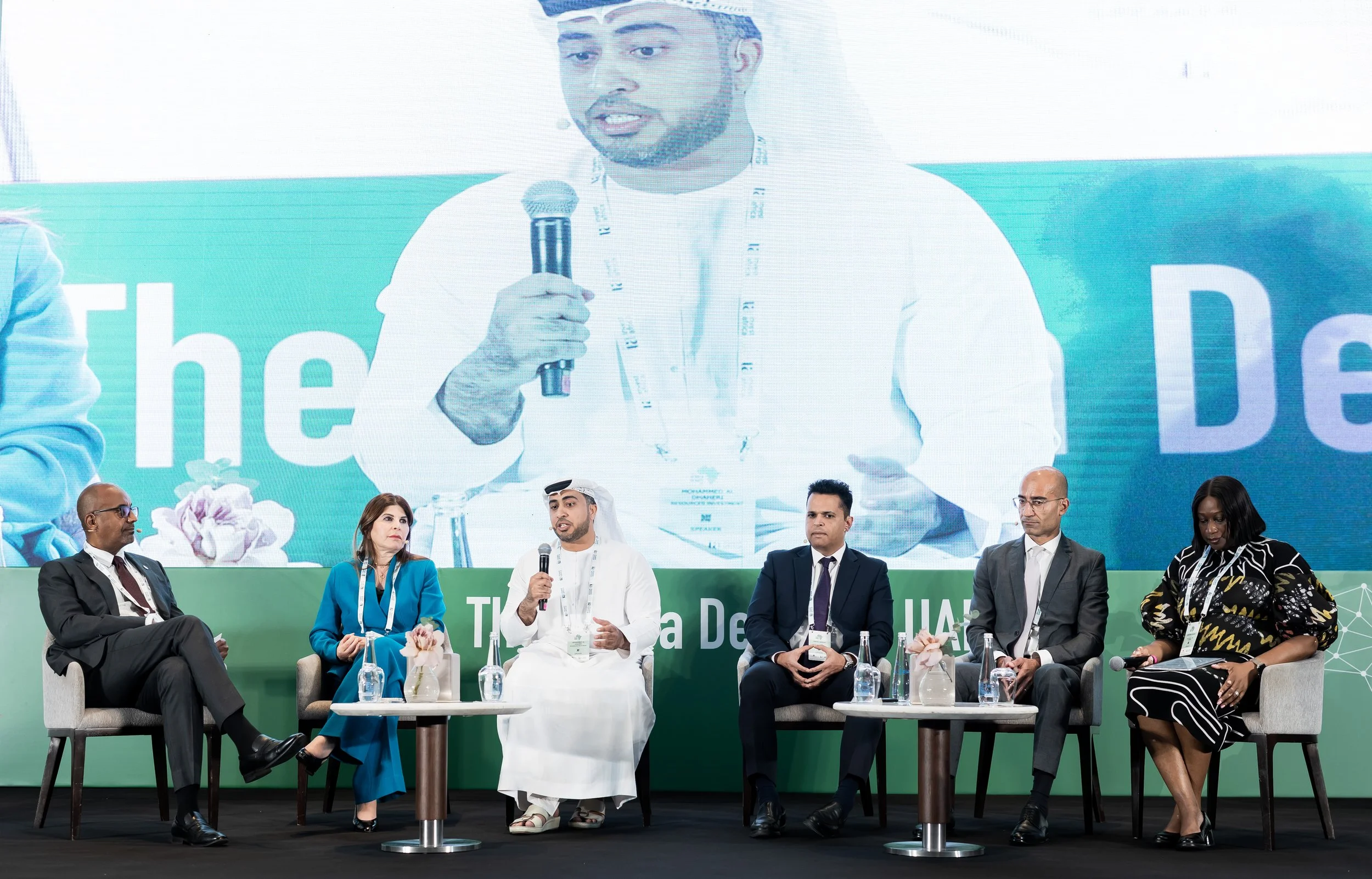
Scaling the UAE-Africa Trade Corridors: Beyond Ports to Regional Connectivity
Hosted in partnership with the UAE Ministry of Foreign Trade and the UAE Ministry of Investment, the third edition of The Africa Debate – UAE will take place in Dubai on 22 October 2026, bringing together senior government representatives, investors and business leaders to examine the next phase of the UAE–Africa economic relationship across six key themes.
Over the past few years, significant UAE investments in Africa’s logistics sector have brought growing attention to the expansion of port infrastructure, from the development of new ports and terminals to the scale of investment and the strategic locations they serve.
At the third edition of The Africa Debate – UAE, we want to move that conversation forward. The question is no longer simply where infrastructure is being built, but how those investments are translating into the more efficient movement of goods across the continent, and what that means for the businesses and consumers that ultimately depend on them.
A port is only one part of the journey. For a manufacturer importing raw materials, a farmer trying to reach a regional market, or a retailer stocking everyday goods, the effectiveness of the logistics system depends on what happens beyond the terminal: the roads and railways connecting inland markets, the efficiency of border crossings and customs systems, the availability of warehousing and cold-chain infrastructure, and the cost and reliability of moving goods from one market to another.
This is where the next phase of the UAE–Africa logistics partnership can have its greatest impact: connecting port investment with the wider trade corridors that allow goods to move more easily from producer to market, across borders and ultimately to the everyday consumer.
From Gateway Infrastructure to Trade Corridors
Over the past decade, UAE investments have played an increasingly important role in developing ports, logistics hubs, and trade infrastructure across Africa. Yet the long-term value of these assets will not be measured by the performance of individual ports alone, but by their ability to connect producers, manufacturers, and consumers through integrated trade corridors.
Across the continent, the economics of trade are heavily shaped by what happens inland. Roads carry around 80% of Africa’s goods, making the quality of road networks, border crossings and connections between ports, production centres and inland markets fundamental to the cost and reliability of trade.
The next phase of investment therefore lies in connecting ports to the wider road and rail networks, border and customs systems, warehousing and distribution networks that determine whether increased capacity at the coast translates into more efficient trade across the continent.
The Impact Beyond Logistics
The impact of logistics investment extends far beyond the sector itself. Food supply chains provide one example of how transport and trade infrastructure can directly affect the performance of other parts of the economy.
According to the World Bank, food in African countries travels an average of 4,000 kilometres over 23 days, and across that journey, the efficiency of ports, roads, border processes, warehousing and storage can determine how quickly goods reach markets, in what condition and ultimately at what cost.
The effects are significant. The World Bank estimates that across Sub-Saharan Africa, around 20% of cereals, 25% of rice and maize, and up to 40% of fruits and vegetables are lost, with inadequate storage, transport and logistics among the contributing factors.
This illustrates a much broader investment opportunity. Connecting ports with efficient road and rail networks, modern storage and warehousing, streamlined border processes and stronger regional distribution networks can create value across entire supply chains, strengthening agricultural value chains, manufacturing, retail and regional trade, while helping producers reach larger markets, businesses move goods more reliably and consumers access products more efficiently and competitively.
A Growing Trade Opportunity
The importance of that connectivity will only increase as trade expands. According to the UAE Ministry of Foreign Affairs, UAE–Africa bilateral trade reached approximately US$107 billion in 2024, up 28% from 2023. As these trade flows grow, there is a greater opportunity to connect investment in maritime infrastructure with the wider systems required to move goods efficiently between African markets and between Africa, the UAE and the rest of the world.
The African Continental Free Trade Area adds another dimension to this opportunity. UNECA projects that intra-African exports could increase by 45% by 2045, adding an estimated US$275.7 billion to the value of cross-border trade across the continent.
Accommodating those growing trade flows will require corresponding capacity across road, rail, maritime and air transport. Greater market access must also be matched by connectivity on the ground. The efficiency of transport networks, border processes and trade systems will ultimately determine how easily producers can reach neighbouring markets and how efficiently goods can reach businesses and consumers across the continent.
Building the End-to-End System
The opportunity, therefore, is to think about logistics infrastructure as a connected system rather than a collection of individual assets.
Bringing together policymakers, investors, logistics operators, infrastructure developers and regional institutions, Scaling the UAE–Africa Trade Corridors: Beyond Ports to Regional Connectivity will examine the shared investment opportunities across ports, road and rail networks, border infrastructure, warehousing, cold chains, customs systems and digital platforms that can strengthen trade corridors between and across African markets, the UAE and the wider global economy.
At the centre of the discussion is a practical question: how can UAE and African partners invest across the wider logistics ecosystem to move goods more efficiently and competitively from producer to market, and ultimately to businesses and consumers?
Key Questions at The Africa Debate – UAE
What coordinated investment and partnerships are needed to better connect Africa’s ports with inland markets, production centres and neighbouring economies?
How can integrated trade corridors strengthen regional connectivity, increase intra-African trade and unlock new opportunities for trade and investment?
As trade between Africa, the UAE and global markets grows, how can ports, road and rail networks, customs systems and logistics platforms work together to move goods more efficiently across the entire journey?
How can UAE and African partners build more resilient trade corridors while strengthening the infrastructure needed to support long-term industrialisation and economic growth?
How can the next generation of logistics investment translate increased port and trade capacity into tangible value for producers, manufacturers, retailers and ultimately the everyday consumer?
Stay Informed
Share your email address to receive the latest news and programme updates.
We respect your privacy.