

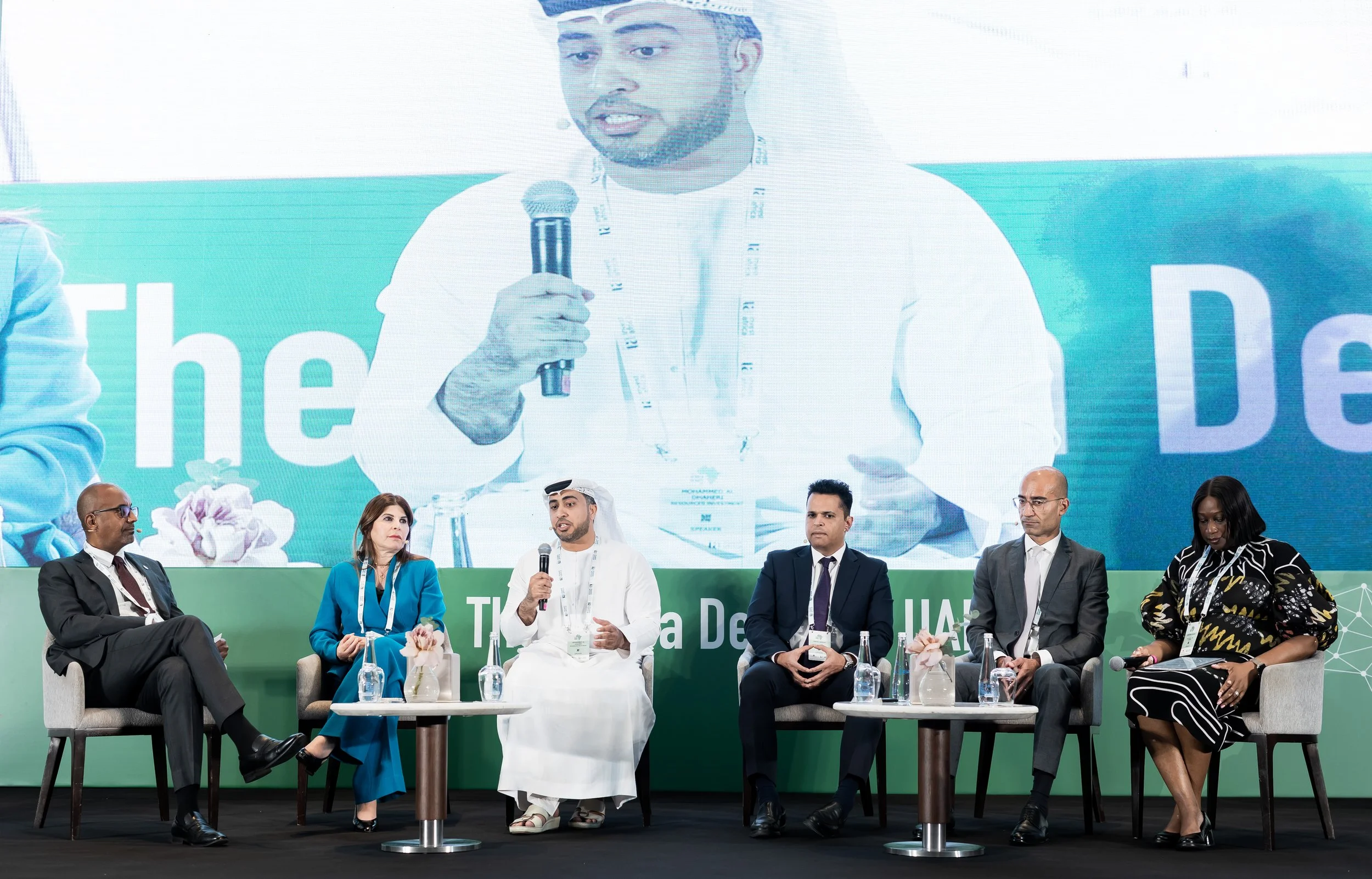
Beyond Production: Scaling Investment Across the Agri-Economy Value Chain
Hosted in partnership with the UAE Ministry of Foreign Trade and the UAE Ministry of Investment, the third edition of The Africa Debate – UAE will take place in Dubai on 22 October 2026, bringing together senior government representatives, investors and business leaders to examine the next phase of the UAE–Africa economic relationship across six key themes.
One of those conversations will focus on an increasingly strategic part of that relationship: the agri-economy.
Africa's Agri-Economy: Moving Beyond Production
Africa holds approximately 60% of the world's uncultivated arable land, placing the continent at the center of the long-term conversation around global food production and food security. Yet the opportunity extends far beyond what is grown. Across the continent, greater investment is needed in the infrastructure and businesses that connect production to markets, from agro-processing and storage to irrigation, logistics, technology and regional trade.
The financing available to support that transformation remains limited. According to a 2026 joint report by the Food and Agriculture Organization of the United Nations (FAO), the African Union Commission, UN Economic Commission for Africa and World Food Programme, bank credit to agriculture accounts for less than 4% of total credit across Africa, while annual foreign direct investment into food and agriculture is often below US$2 billion.
The opportunity, therefore, is not simply to produce more. It is to invest across the value chain so that more agricultural products can be processed, stored, transported, and transformed closer to where they are produced, creating stronger domestic industries and more competitive regional and global supply chains.
From Agriculture to Agri-Industry
This shift is already beginning. The African Development Bank's Special Agro-Industrial Processing Zones are now being developed across 28 sites in 11 African countries, designed to connect agricultural production with processing, infrastructure and market access.
By bringing processing capacity closer to areas of production, these platforms provide a model for how public investment and development finance can create the conditions for greater private-sector participation.
At the continental level, the focus is also shifting. The African Union's Kampala CAADP Strategy and Action Plan 2026–2035 aims to mobilize US$100 billion in investment, increase Africa's agrifood output by 45%, triple intra-African trade in agricultural goods and reduce post-harvest losses by half by 2035.
The question now is how these commitments translate into bankable projects and investment at scale.
A Growing UAE–Africa Agri-Partnership
For the UAE, food security, resilient supply chains, and agricultural innovation are long-term economic priorities. The UAE's National Food Security Strategy 2051 places particular emphasis on sustainable food production, diversification of food sources, technology, and international partnerships. More recently, the UAE has continued to position agriculture and food industries as areas for investment, innovation and value-chain development. Africa is increasingly part of that conversation.
In 2025, the UAE and South Africa convened a Sustainable Agriculture and Food Forum focused specifically on facilitating agrifood trade and investment, public-private partnerships in agricultural technology, climate-resilient agriculture and smart logistics. This creates an opportunity to broaden the UAE–Africa agricultural relationship towards long-term investment across processing, infrastructure, technology, and integrated supply chains.
The opportunity is about building partnerships that bring together the UAE and Africa’s respective strengths across capital, production, technology, infrastructure and market access, strengthening food resilience, creating greater value across agricultural supply chains and supporting more integrated and competitive agri-economies across both regions.
Water Is Part of the Investment Equation
None of this can be separated from water. Irrigation, storage, water efficiency, and climate-resilient infrastructure will increasingly determine where agricultural investment can scale and remain commercially viable. That makes 2026 particularly significant. The African Union has designated water and sanitation as its Theme of the Year for 2026, recognizing water as fundamental to economic transformation, climate resilience and food security.
In December, the UAE and Senegal will co-host the 2026 United Nations Water Conference in the UAE, placing investment in water infrastructure and water security firmly on the international agenda.
For the agri-economy, the connection is clear: investment in agricultural production must increasingly be accompanied by investment in the water systems that make long-term productivity possible.
From Opportunity to Investment
There are already signs of a growing pipeline of investable opportunities. In 2025, FAO identified more than US$1.8 billion in agrifood investment opportunities across Southern African Development Community countries, spanning areas including climate-smart irrigation, mechanization, agro-processing and regional trade.
But scaling these opportunities will require more than individual projects. It will require governments, development finance institutions and private investors to work together to create investable platforms, manage risk and connect capital with projects across the full value chain.
At The Africa Debate – UAE 2026, Beyond Production: Scaling Investment Across the Agri-Economy Value Chain will bring together policymakers, investors, agribusiness leaders and development finance institutions to explore what comes next:
The discussion will explore:
Where across the agri-economy value chain can investment create the greatest long-term value, from production and processing to storage, logistics and technology?
How can UAE–Africa partnerships bring together capital, production, technology, infrastructure and market access to strengthen integrated agri-industrial value chains?
What financing structures and investment models can mobilize greater private and institutional capital across the agri-economy?
How can investment in water infrastructure and agricultural technology strengthen productivity, resilience, and commercial opportunities?
How can UAE food-security priorities and African agri-industrial development reinforce one another, creating greater value, resilience and market opportunities across both regions?
Stay Informed
Share your email address to receive the latest news and programme updates.
We respect your privacy.