
From Investment to Impact: Scaling the UAE-Africa Corridor
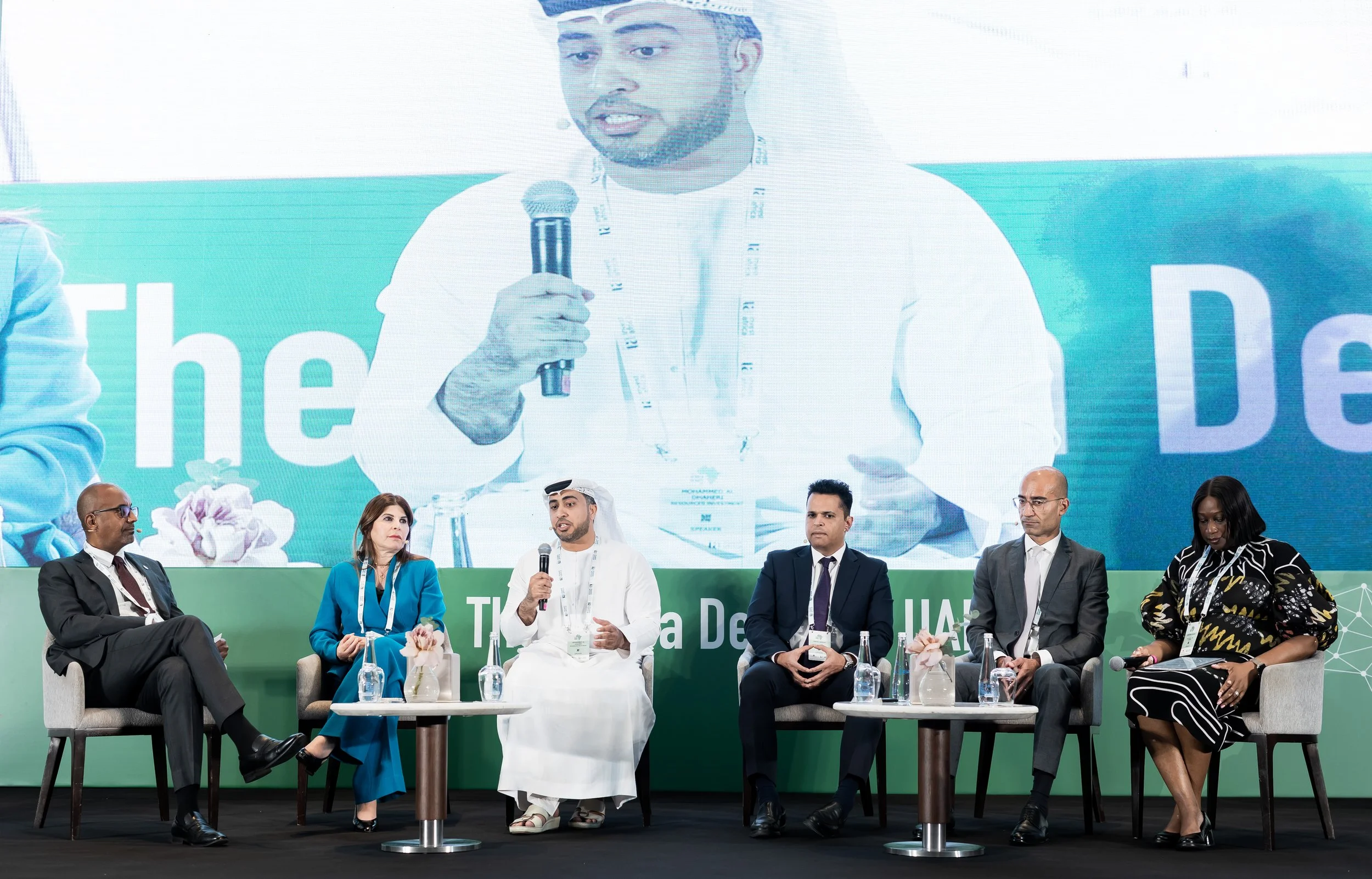
As the UAE and Africa deepen one of the world's fastest-growing investment relationships, the Third Edition of The Africa Debate – UAE will bring together leaders from government, business, and finance to examine how policy, capital and cross-sector partnerships can translate strategic investment into long-term economic impact.
The Scale of the Relationship
This growing partnership is already being reflected in the scale and diversity of UAE investments across the continent. Between 2020 and 2024, the UAE has committed to more than $118 billion in Africa, making it one of the world's largest investors on the continent. UAE investment is increasingly supporting sectors central to Africa's long-term economic transformation, from energy and logistics to digital infrastructure and artificial intelligence. This includes more than $70 billion committed specifically to energy and renewable projects, alongside extensive port operations and the recently announced $1 billion ‘AI for Development’ initiative.
A Stronger Trade Architecture
The UAE–Africa investment relationship is entering a new phase, where the focus is shifting from capital commitments to measurable economic impact. Increasingly, that next phase is being supported by a stronger policy and trade architecture designed to facilitate investment, improve market access, and enable businesses to scale across borders.
The UAE's Comprehensive Economic Partnership Agreements (CEPAs) are strengthening bilateral economic partnerships by reducing barriers to trade, improving market access, and facilitating investment. Recent agreements with Sierra Leone, the Democratic Republic of the Congo, and Gabon reflect the UAE's growing commitment to expanding its commercial ties across Africa, building on a network of 37 CEPAs concluded to date, 18 of which have already entered into force.
AfCFTA and the Continental Market
At the same time, the African Continental Free Trade Area (AfCFTA) is creating the conditions for those partnerships to scale by opening access to a more integrated continental market, strengthening regional value chains, and enabling investment to reach greater scale across Africa. The direction of travel is clear on both sides; the question is pace and alignment.
From Commitment to Delivery
The gap between investment announced and investment delivered remains a shared challenge. On the UAE side, significant pools of capital are available, but deployment depends on the availability of bankable projects, appropriate risk allocation, and investment-ready pipelines. Across Africa, policy reforms continue to improve the investment climate, but regulatory fragmentation, foreign exchange risk, and differing investment frameworks continue to complicate the pace and scale of project delivery.
What Alignment Requires
The challenge is no longer mobilising investment, but ensuring that policy, capital, and delivery mechanisms translate into bankable, scalable outcomes. Achieving this will require stronger alignment between governments, investors, development finance institutions, and private sector partners, supported by investment-ready project pipelines, enabling policy frameworks, and innovative financing models. At The Africa Debate – UAE, investors, operators, policymakers, and financiers will examine where that alignment is already producing results, and what it will take to sustain and scale it.
Key questions for the session:
How will strategic investments across multiple sectors shape the next phase of the UAE–Africa economic corridor?
How are trade reforms, AfCFTA, and the UAE's Comprehensive Economic Partnership Agreements (CEPAs) reshaping the investment landscape, and what further policy changes are needed to accelerate implementation?
Many opportunities are commercially attractive but not yet investment ready. How can governments, DFIs, and private investors work together to scale blended finance and mobilise larger pools of long-term capital?
How should success be measured beyond capital deployed, from stronger supply chains and industrial growth to jobs, competitiveness, and long-term economic value?
How can more efficient cross-border payments, foreign exchange solutions and financial infrastructure reduce friction, improve the ease of doing business, and accelerate trade and investment across the UAE–Africa corridor?
Stay Informed
Share your email address to receive the latest news and programme updates.
We respect your privacy.