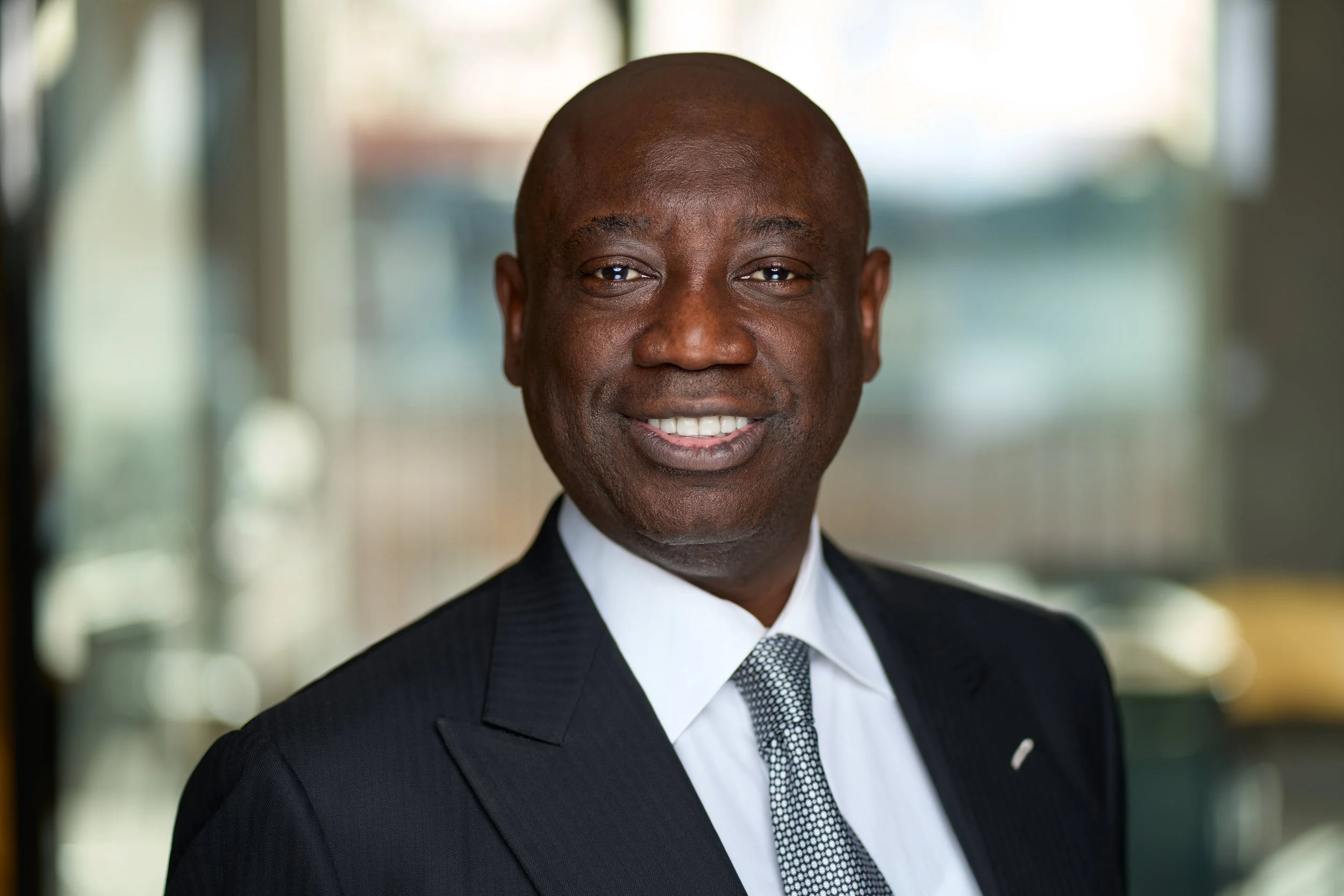
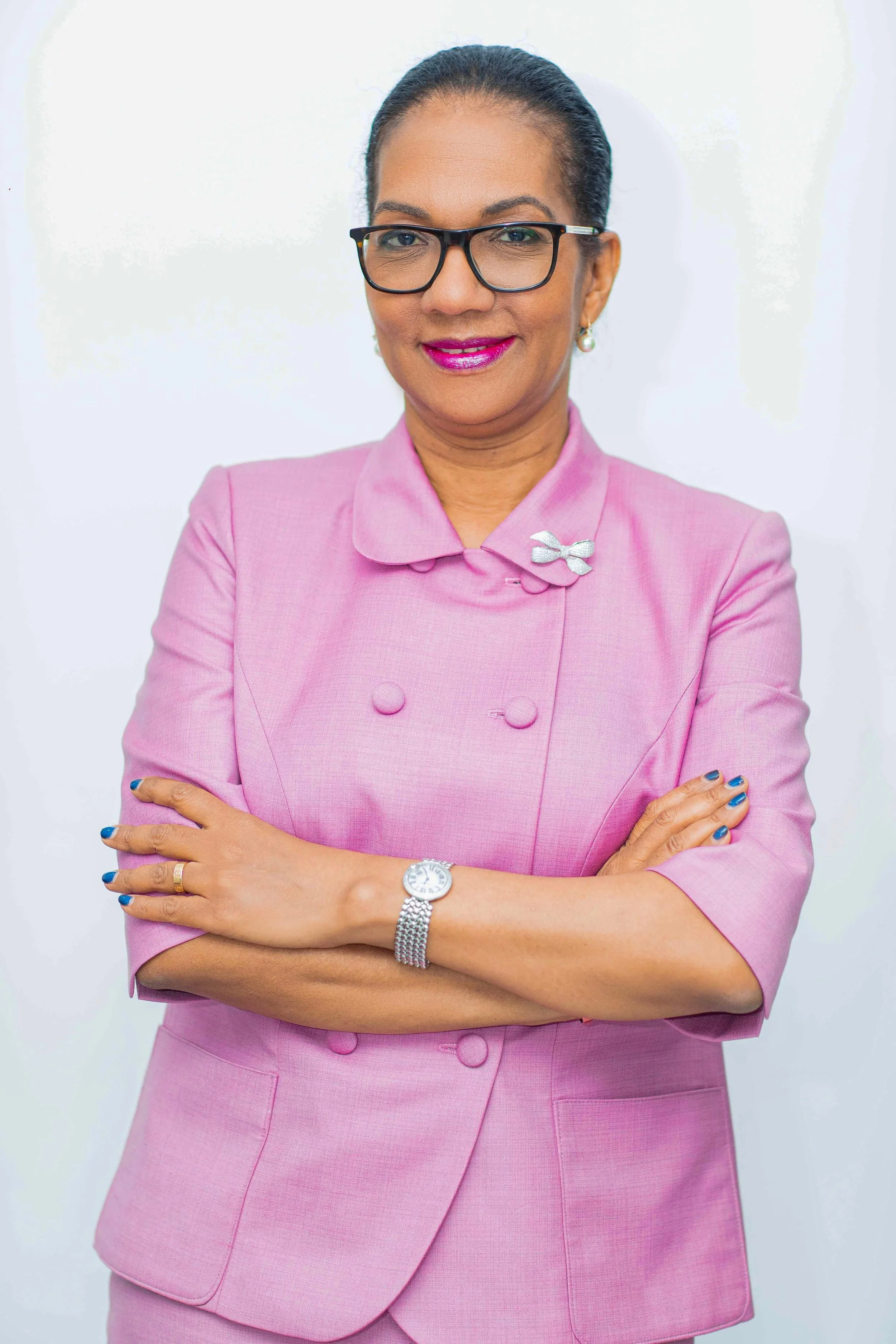
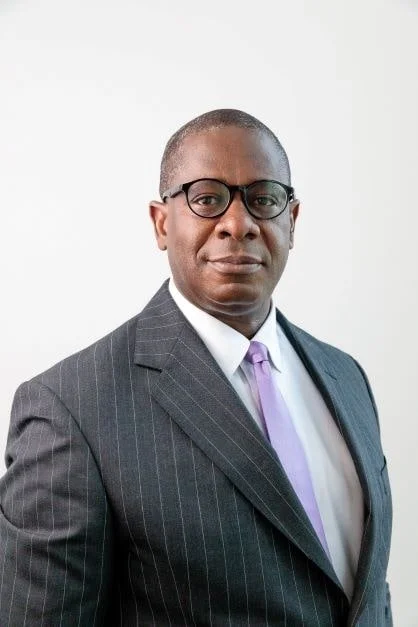
The carousel below is managed using blog items… clunky (needs to be managed as blog items, but works…
By far the easiest to manage solution is this one (but more limited in terms of design):
President & Chairman of the Board of Directors | Africa Export-Import Bank
Co-Founder & CEO | Development Partners International
Managing Partner | Premier Invest
Chief Executive Officer | Absa International
Chief Executive Officer | Invest Africa
Chief Executive Officer | Plantations et Huileries du Congo
CEO & Managing Director, Kenya & East Africa | Standard Chartered
Vice President, Private Sector, Infrastructure & Industrialisation | African Development Bank
Africa contributes less than 4% of global greenhouse gas emissions and yet is suffering some of the most severe impacts of climate change. The continent’s rivers are drying up, rain patterns are changing and crop yields diminishing – all of which threaten lives and livelihoods in the region. As Sanjeev Gupta, Executive Director for Financial Services at the Africa Finance Corporation (AFC) highlighted, in Africa, “climate change is not a theoretical discussion”.
In times of high volatility, as the global economy is currently experiencing, capital tends to retreat to markets closer to home. Africa’s funding gap is such that private capital, both domestic and international, will have to fill the bulk of the region’s development needs. Emerging from the challenges of the pandemic, it is more evident than ever that Africa will have to drive the solutions to its own challenges and advocate for its own interests in global markets.
With the Russia-Ukraine war compounding international supply chain issues and driving up inflation, the global economy has emerged from the pandemic into what is beginning to feel like an endemic crisis. We sat down with Nick Allan, CEO of Control Risks, after the Africa Debate to discuss his assessment of how Africa will be impacted by these global trends.
The ground has shifted and cheap budget funding in frontier markets is a thing of the past. In the current climate, African nations will struggle with a narrowing investor pool as high inflation and FX risks undermine attractiveness of Treasury securities. The funding gap has scarcely been so wide and widespread. However, funding options have also never been so diverse, and for those putting the correct policies in place, a new age of funding beckons.
Africa’s growing significance as a strategic partner with the UK will help both regions further their sustainable development agendas and strengthen their in the global geopolitical landscape. Synergies across clean energy, technology and finance provide firm footing to grow the UK’s relationship across the continent. We teamed up with Standard Chartered Bank to produce a paper providing a lay of the land, areas for growth and recent stagnation in trading relations. We included regional overviews from Standard Chartered Bank, spoke with CEO of British International Investment and gathered insights from companies on the ground.
From 14th to 16th September 2021, Invest Africa hosted the 7th Africa Debate virtually assembling over 1,000 business and policy leaders from over 50 countries to discuss the most pressing social and economic issues facing the African continent.
Throughout the discussions four key priorities for public and private cooperation emerged: strengthening Africa’s institutions, building more resilient health systems, boosting trade and investment and investing in a sustainable future.
The newly elected President of Zambia, H.E. Hakainde Hichilema, will address over 1000 global businesses and investors at Invest Africa’s flagship event, The Africa Debate, on 15th September. The virtual broadcast will see President Hichilema outline his plans to restore macro-economic stability to Zambia in conversation with the Chairman of Invest Africa, Rob Hersov.
The President of Ghana, H.E. Nana Addo Dankwa Akufo-Addo, will address international investors and businesses at Invest Africa’s annual Africa Debate from 14th-16th September as part of his government’s drive to diversify the Ghanaian economy and boost foreign direct investment (FDI). The President will be accompanied by the Ministers of Finance, Energy and Food and Agriculture at the dedicated Ghana Investment Forum on 14th September.
In fact, most African SMEs struggle to leverage appropriate capital from formal financial sources. According to the World Bank, the SME financing gap in Sub-Saharan Africa sits at $331 million. Blockages to finance for this ‘missing middle’ exist on both the supply and demand side of the SME financing ecosystem. For SMEs deficits in corporate governance and technical skills as well as lack of collateral or proof of concept make access to credit or equity challenging. For investors and banks these same factors contribute to the high-risk perception of African markets and make it difficult to accurately assess credit ratings and potential market share. Bridging the finance gap for African SMEs is critical to the Continent’s recovery and can offer investors an opportunity to tap into growth in the world’s youngest continent.
MSMEs form the backbone of Africa’s economies and are the engine of the region’s job creation drive, accounting for 70 percent of employment in the region. With a high proportion of informal enterprises, many of Africa’s MSMEs, which already faced significant challenges, have been hit hard by the pandemic.
Few countries have been spared the profound social and economic impact of Covid-19. The crisis has demanded coordinated mobilisation both nationally and internationally, drawing on the expertise of both the private and public sectors. The World Economic Forum has called on leaders to seize the “unique window of opportunity to shape the recovery” and framed the challenge as “The Great Reset”. However despite this momentum, the pandemic has also deepened global inequalities, highlighting the need for any recovery to bring with it heightened investment in underserved communities and emerging markets and a more unified approach to global challenges.
Tech has often been heralded as Africa’s great accelerator. The tool that will allow the Continent to leapfrog middle income regions, solve complex social challenges and establish itself as the emerging market for the fourth industrial revolution. All eyes are on Africa’s tech industry to provide future opportunities for growth through the Covid-19 crisis.
Over the last few months, Invest Africa has been speaking to the Continent’s leading entrepreneurs about the market creating businesses they have built, how they have responded to the pandemic and their hopes for the future of Africa’s tech ecosystem.
“Rather than drilling for oil, Africa should be building for the data economy”. This was the message Vera Songwe, Executive Secretary of the UN’s Economic Commission, sent to Africa’s policy makers last year. Data is rapidly becoming one of the world’s most sought after commodities. To thrive in the future global economy, African markets need to ensure they are not left behind. Asoko Insight is a corporate data company seeking to bridge the knowledge gap for investors operating in African markets. Ahead of Invest Africa’s flagship event, The Africa Debate, we sat down with one of its co-founders, Rob Withagen.
On a continent where 76% of the workforce is engaged in informal labour, the question of how to inject capital into businesses overlooked by traditional banking services has weighed on the minds of developers and financiers alike for decades. If opportunities are to be created for Africa’s booming population, a financial ecosystem that works for micro, small and medium sized enterprises needs to be developed.
More energy strikes the Earth's surface from the sun in 90 minutes than the worldwide consumption from all sources in the entire year 2001. Solar energy will play a central role in the energy transition and Africa is well placed to lead the way.
Our content partners, Asoko Insight have mapped Kenya's major solar power players to shed light on this growing market.
Over 600 million Africans do not have access to electricity and yet the continent boasts some of the best solar radiation levels in the world. With this wide array of under exploited opportunities, it is no wonder that private equity firms have been turning to African energy markets. We spoke to Scott Mackin, Managing Partner at Denham Capital about the role that private equity can play in addressing Africa’s energy funding gap.
The fintech industry in Africa is predicted to be worth $3 billion by 2030 and some of the most successful African start-up stories of the last decade have built their business models on mobile money. We spoke to Milkah Wachiuri, Chief Growth Officer at Cellulant, a leading pan-African digital payment platform, about the impact of fintech on African markets and how Cellulant plans to scale-up its business.
‘Kobo360 is using technology to connect cargo owners, truck owners, drivers and cargo recipients.’ Logistical challenges are often cited by businesses as a major impediment to building scaled-up and profitable operations in Africa. We spoke to Ife Oyedele II, Co-Founder of Kobo360, about how technology is breaking down barriers to trade in Africa and his ambitious vision to expand Kobo360 across the continent.
The AfCFTA is Africa’s most ambitious attempt yet to kick-start regional integration and trade. Its objective is nothing less than to unify the continent’s eight regional economic blocs into a single market of 1.2bn people, worth up to $3tr.
As policy uncertainty reigns in Westminster, we spoke to Her Majesty’s Trade Commissioner for Africa, Emma Wade-Smith OBE, about why Africa matters to the UK, the future of British-African trade, and how her team is supporting British businesses on the continent through this time of global instability.
The International Monetary Fund expects growth in sub-Saharan Africa to increase from 3% in 2018 to 3.5% this year, as the region continues a fragile recovery from the commodities slump…. Lanre Akinola, Editor of Nurmara explores how Africa can weather global uncertainty.
The UN General Assembly has declared 2016-2025 the Third Industrial Development Decade for Africa. Yet, Africa’s manufacturing value added accounted for only 1.6% of the global total in 2014. We spoke to Franziska Hollmann, Director of Corporate Finance at the German Development Finance Institution, DEG, about how sustainable industrialisation can be achieved in Africa and crucial role that patient capital plays in this process.
Total foreign direct investment (FDI) into Africa reached $40bn in 2018, up 6% on the previous year. This remains well below levels seen before the commodities slump, which exceeded $60bn in 2015. Read analysis by our content partner, Nurmara, on Africa’s shifting FDI landscape…
Our content partner, Nurmara, writes on the impact of tech in Africa, highlighting achievements from the likes of Jumia, Africa’s first big stage tech IPO to list on the New York Stock Exchange and the future of fintech across the continent.
Africa’s people are one of the continent’s greatest strengths, but without sufficient investment in skills, jobs and financial inclusion the continent’s rapidly growing population could undermine the region’s development. With a current median age of 19.7, Africa is the youngest continent globally and expected to be home to over 2 billion people by 2050, representing 1/3 of the global workforce.